Yoga and Stretching for Runners: Why Mobility Matters More Than Flexibility
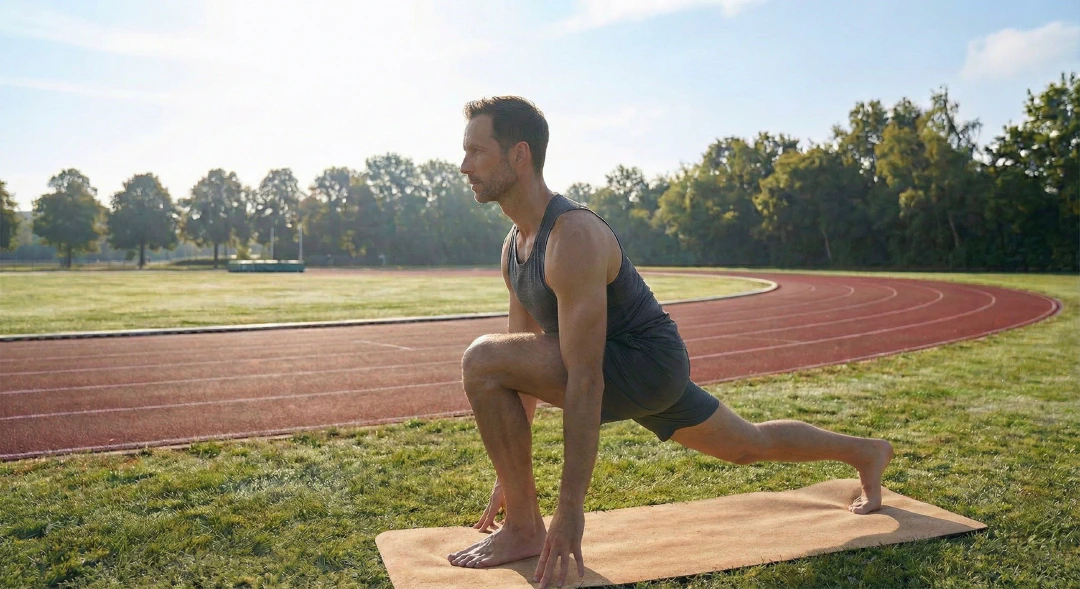
Yoga and stretching are often recommended to runners as a solution for tightness, injury, and poor performance.
But when used without context, they often deliver very little — and in some cases, make problems worse.
For runners, the goal is not extreme flexibility.
It is controlled mobility, applied in the right places, at the right time, to support training rather than interfere with it.
Why Most Runners Get Stretching Wrong
Many runners stretch simply because something feels tight.
Calves, hamstrings, hips — the usual areas.
The assumption is straightforward:
tight muscles need stretching.
In reality, tightness is rarely caused by short muscles. More often, it reflects overload, poor movement control, or compensation elsewhere.
Stretching without understanding the cause can:
- reduce stability where it is needed most
- mask strength or gait-related issues
- provide temporary relief without long-term change
Yoga and stretching are only effective when they are applied with intent and context.
Flexibility vs Mobility: What Runners Actually Need
This distinction is critical for runners.
Flexibility refers to passive range of motion.
Mobility refers to the ability to actively control movement through that range.
Running does not require extreme flexibility.
It requires repeatable, controlled movement under fatigue.
Runners who are flexible but lack control often:
- overstride
- collapse through the hips
- overload calves and hamstrings
- lose efficiency late in races
Mobility supports running performance.
Flexibility without control does not.
Where Yoga Helps Runners (When Used Properly)
When used correctly, yoga can be highly beneficial for runners.
Its primary benefits are not increased flexibility, but improved movement awareness, control, and recovery.
Yoga can help runners:
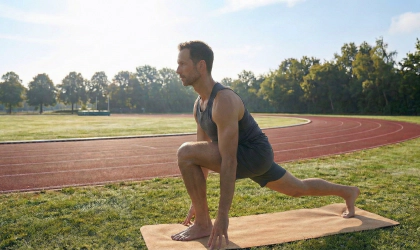
- restore hip and thoracic mobility
- improve posture and trunk control
- reduce unnecessary muscular tension
- improve breathing mechanics
- down-regulate the nervous system after training
These benefits are particularly valuable during periods of high training load.
Where Stretching Can Make Things Worse
Stretching becomes counterproductive when:
- already unstable areas are stretched aggressively
- static stretching replaces strength or control work
- deep stretching is done before hard running sessions
- yoga is used to “loosen” areas that lack stability
In these situations, stretching treats symptoms rather than causes.
A muscle that feels tight is often working harder to compensate for a lack of support elsewhere.
How Yoga and Stretching Fit Into a Runner’s Training
Timing and intent determine whether yoga and stretching help or hinder training.
As a general guide:
- After easy or steady runs: light mobility and breath-focused yoga
- During heavy training blocks: shorter, targeted sessions
- Before hard sessions: dynamic movement, not static stretching
- On rest or recovery days: nervous-system focused mobility
Yoga should support recovery and movement quality — not replace strength or blunt training adaptations.
How Yoga Connects to Gait and Strength
Mobility does not exist in isolation.
At Anchara, yoga and stretching are considered alongside:
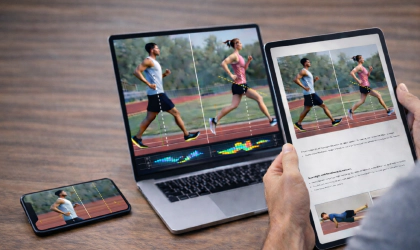
- gait analysis
- strength training
- breathing patterns
The purpose is not to make runners more flexible, but to improve movement efficiency and durability.
Mobility should make running and strength work feel more stable, not less.
Who Benefits Most From Yoga — and Who Needs Caution
Yoga tends to be most effective for:
- high-mileage runners
- runners who feel persistently tight despite stretching
- runners holding excessive upper-body tension
- runners struggling to recover between sessions
Runners who lack stability or control may need:
- strength and gait work first
- targeted mobility rather than long yoga sessions
Again, context matters.
How Yoga Fits Into the Anchara Method
Yoga and mobility support every phase of the Anchara Method:
- Reset – reduce unnecessary tension and improve awareness
- Rebuild – restore controlled range of motion
- Refine – support efficient movement patterns
- Rise – maintain mobility as training load peaks
Yoga is not added for flexibility alone.
It is used to support how you move and how you train.
Start With Movement, Not Guesswork
If you stretch regularly but still feel tight, fatigued, or fragile, the answer is unlikely to be more stretching.
It is understanding:
- how you move
- where load is going
- what requires mobility versus strength
Start here:
Running rewards clarity. Mobility works best when it supports it