Online Gait Analysis for Runners: What It Is, Why It Matters, and How We Use It
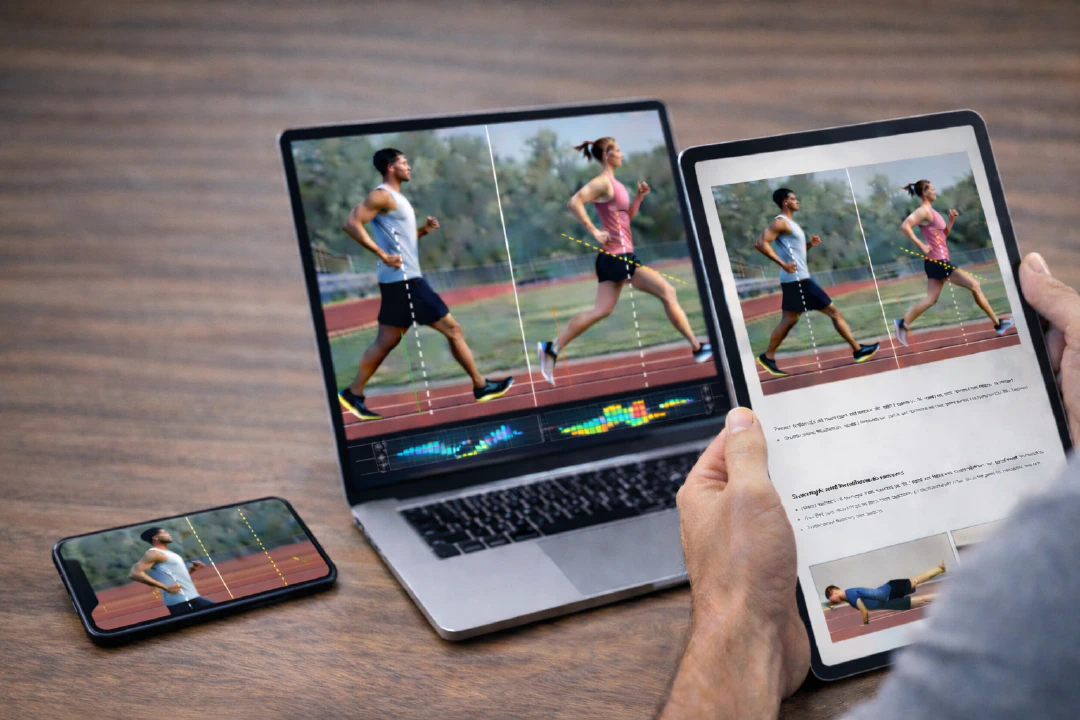
Gait analysis helps runners understand how they move, how they absorb load, and why certain injuries or performance plateaus keep repeating.
Rather than guessing with training plans or exercises, gait analysis provides objective insight into running mechanics — so training improves movement instead of reinforcing inefficiencies.
What Is Online Gait Analysis for Runners?
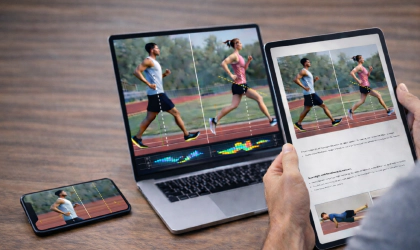
Online gait analysis uses running video to assess running biomechanics remotely, without compromising insight or accuracy.
Running gait is best analysed when:
- you are running naturally
- fatigue is present
- movement is repeated, not staged
Video allows mechanics to be captured clearly, slowed down, replayed, and assessed frame by frame — without the artificial constraints of a lab or a single treadmill snapshot.
Because running mechanics are pattern-based rather than location-dependent, online gait analysis is highly effective at identifying:
- how load enters the system
- where control is delayed or missing
- how posture and rhythm change under effort
What matters is not where the video is recorded, but how it is interpreted and what changes follow.
What Online Gait Analysis Assesses
Online gait analysis is the structured assessment of running biomechanics.
It examines how your body moves during running, including:
- Foot strike and ankle control
- Knee tracking and joint alignment
- Hip stability and pelvic movement
- Trunk posture and rotation
- Cadence, rhythm, and stride timing
The goal is not to “fix” your style or copy elite runners.
It is to understand your individual movement pattern and how it responds to load and fatigue.
Online gait analysis allows us to assess real running, in real conditions, and integrate the findings directly into training — not just comment on form in isolation.
Why Gait Analysis Matters in Running Training
Many runners follow well-written training plans and still struggle with:
- recurring niggles
- stalled progress
- breakdown late in marathon blocks
The issue is rarely effort or consistency.
It is how load travels through the body.
Two runners can complete the same session at the same pace:
- one adapts and improves
- one accumulates stress and breaks down
Gait analysis explains why.
Training volume and intensity only work if your mechanics can tolerate them.
What We Assess During an Anchara Gait Analysis
Anchara gait analysis looks at the whole running system, not isolated body parts.
Foot and Ankle Mechanics
- How force enters the body
- Stability through stance
- Push-off control and timing
This often explains calf, Achilles, and plantar fascia issues.
Knee and Hip Control
- Knee tracking under load
- Hip contribution versus compensation
Many knee problems originate at the hip.
Pelvis and Trunk Stability
- Excessive rotation or stiffness
- Poor force transfer through the core
This frequently links to late-race fatigue and loss of efficiency.
Cadence, Rhythm, and Overstriding
- Step rate relative to speed
- Braking forces
- Changes under fatigue
Often performance improves without running faster — simply by running more efficiently.
Why Video Gait Analysis Works
Video allows running mechanics to be slowed down and analysed frame by frame.
However, the value comes from interpretation, not the footage itself.
At Anchara, gait analysis feeds directly into:
- specific running cues
- targeted strength priorities
- focused mobility work
- smarter training structure
Nothing is generic. Everything is applied.
Common Running Gait Patterns We See
While every runner is individual, certain patterns appear repeatedly:
- overstriding with excessive braking
- hip-locked runners overloading calves or hamstrings
- quad-dominant runners fading late in races
- poor trunk control at higher effort
These patterns are not faults — they are adaptations.
Gait analysis identifies which adaptations are limiting progress.
What Changes After a Gait Analysis?
Most runners notice three immediate benefits:
- Clarity — understanding why issues keep returning
- Efficiency — smoother running at the same pace
- Direction — knowing exactly what to work on
Progress comes from:
- strength work that transfers to running
- mobility where it actually matters
- cues that hold up under fatigue
This is how durability and speed improve together.
Is Gait Analysis Only for Injured Runners?
No.
Gait analysis is equally valuable if you:
- feel stuck despite consistent training
- are stepping up in distance or intensity
- want to reduce injury risk proactively
- want to improve running economy
Understanding movement early prevents problems later.
How Gait Analysis Fits Into the Anchara Method
Gait analysis is the foundation of the Anchara Method.
It informs every phase:
- Reset – reduce unnecessary tension and compensations
- Rebuild – restore strength, control, and capacity
- Refine – improve efficiency and rhythm
- Rise – express fitness when it counts
We don’t start with a plan.
We start with how you move.
Book a Gait Analysis or Start with the Runner Profile
If you want training that:
- fits your movement
- reduces guesswork
- builds speed and resilience together
Start here:
- Read more about online gait analysis
- Take the free Runner Profile assessment
- Explore the Anchara Method
Running rewards clarity. Gait analysis provides it