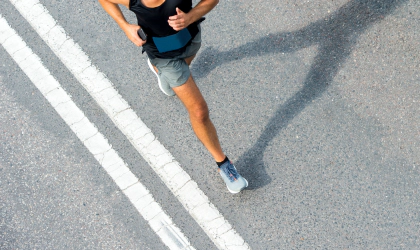
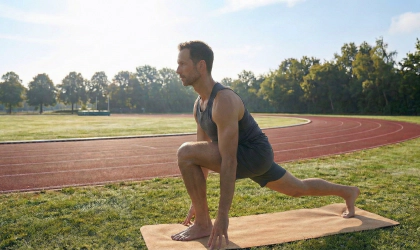
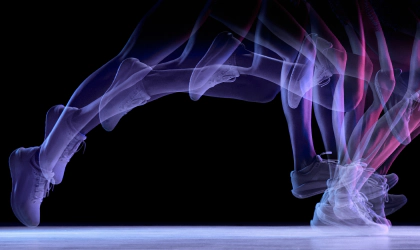
Gait Analysis is where the Anchara Method begins.
A structured 1:1 analysis designed to show you how you move, why it matters, and what needs to change — so training stops guessing and starts working with your body, not against it.
The diagnostic foundation of the Anchara Method
This isn’t about chasing textbook running form.
It’s about understanding your movement patterns, identifying the limiting factors holding you back, and setting a clear direction for smarter, lower-risk progress.
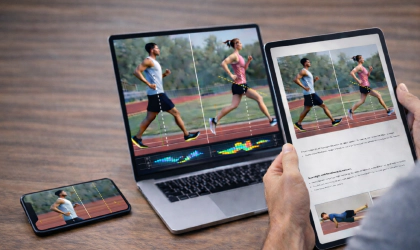
You’ll submit short running videos from simple angles. I’ll analyse how your body moves as a system — looking beyond foot strike alone to cadence, posture, sequencing, stability, and load distribution.
The outcome is clarity:
- What’s helping you
- What’s holding you back
- What actually needs to change — and what doesn’t
Get personalised, data-backed running insights from a coach — not an algorithm.
What this unlocks
This analysis answers three questions every runner should have clarity on:
- What type of runner am I, biomechanically?
- What are my primary limiters right now?
- What should I focus on first to improve efficiency, resilience, and performance?
That insight becomes the foundation for the Anchara Method — whether you continue into the full programme or simply want to understand your running better.
What’s included
Full 1:1 video gait analysis
Runner Type identification
Key biomechanical limiters & movement insights
Clear, prioritised form changes you can apply immediately
Purchase now to unlock the filming module immediately.
Gait analysis is included in the 16 week Anchara Method.
Filming guidance
To get the most accurate insight into how you move, follow the guidance below as closely as you can. Don’t overthink it — we’re looking for patterns, not perfection.
Side view (essential)
- Camera positioned side-on
- Camera kept still (do not pan or follow the runner)
- Full body visible (head to feet)
- 6–10 seconds of continuous running
- Please record two clips: one at an easy/steady pace and one at a faster pace
- Run through the frame (not directly at the camera)
- Tip: Stand 3–5 metres back so your whole body stays in frame.
Rear view (strongly recommended)
- Camera positioned directly behind you
- Full body visible
- 6–10 seconds of running
- Run straight away from the camera
Front view (optional but helpful)
- Camera positioned directly in front of you
- Full body visible
- 6–10 seconds of running
- Run straight towards the camera
Treadmill vs outdoor
Outdoor running is preferred, as it reflects your most natural movement.
That said, treadmill footage is absolutely fine if that’s what you have access to.
Key filming tips
- Phone held horizontally (landscape)
- Camera kept stable (tripod, wall, or steady hands)
- Good lighting
- No zooming
You don’t need to be perfect.
Clarity matters far more than polish — a few clean strides is more than enough for an accurate analysis.